Music played at weddings always reminds me of the music played for soldiers before they go into battle.
—Heinrich Heine
Music played at weddings always reminds me of the music played for soldiers before they go into battle.
—Heinrich Heine
It is important that the January elections go forward, and every terroristic action stresses this importance. That said, ideally the results of the elections would represent the will of the Iraqi people. With the election scheduled for a little over a month away, possibilities are still being considered to counter those working for the Saddamist past or an Islamist alternative future, including this.
Iraq’s electoral commission is considering setting aside seats in the country’s national assembly for Sunni Arab politicians and other groups if their supporters don’t vote in the country’s Jan. 30 elections for fear of attacks by insurgents, a U.S. official said Sunday.
Authorities are looking to counter the effects of threats by insurgents, who have vowed to attack voters and polling stations, said Marine Maj. Jim West, intelligence operations officer for the 1st Marine Expeditionary Force in Fallujah.
The prospect of attacks and intimidation has led some Iraqis, especially in Sunni areas west of Baghdad, to say they’re too afraid to vote. Particularly at issue is the Sunni-dominated Anbar province, where the insurgents are strong.
“They’re trying to find out several different courses of action to ensure that the Sunni population is not disenfranchised from the government,” West said. “That is to ensure that even if the insurgents are able to stop the election process in one area, that these people will still be represented.”
The New York Times first reported the idea in its Sunday editions, citing an anonymous western diplomat who said the option had been presented to an aide to Grand Ayatollah Ali al-Sistani, an influential Shiite cleric who has urged Shiites to take part in the vote.
Shiites comprise about 60 percent of Iraq’s population, with Kurds and Sunni Arabs making up 20 percent each. Some American and Iraqi leaders fear the legitimacy of the election would be jeopardized if Sunnis don’t vote.
West said the electoral commission was particularly worried about the Anbar province, which includes the restive cities of Ramadi and Fallujah. He stressed that it was up to Iraq’s electoral commission and government to decide how to handle the vote, and the idea was one of many the interim Iraqi government was considering.
Fallujah was emptied before a U.S.-led invasion that began Nov. 8 to root out the insurgents who had overrun the city. The government allowed people to start returning to some neighborhoods in the devastated city days ago as part of their bid to get Fallujah resettled for the vote.
West said Iraqi leaders were still working to ensure that all major population centers take part in the vote. He said American and Iraqi officials had talked about the 1st Marine Expeditionary force helping with security by giving local officials intelligence information, setting up cordons and “outer security,” and providing more training to make sure polling places are safe.
The United States does not want to have a visible presence at polling stations for fear that people would see the vote as an American, not Iraqi, process.
“It’s an Iraqi election and the Iraqis need to conduct this election and want to conduct this election on their own,” West said. “We’re willing to help however they would like our help but we are not trying to get more involved by any means more than what they feel like they need.”
West also said people in Fallujah need not register beforehand. Many Iraqis are on population lists compiled for a rationing system worked out under the U.N. oil-for-food program, and he said people could become eligible to vote by showing up on polling day and validating their name on those lists.
I have little, if any, initial objections to such a move. The vote has to go forward to get the government into Iraqi hands and I’m not afraid of little hurdles that allow this. I’ll mull it over a bit while the situation develops, but the Iraqi people need to get their hands on a say in their government and their country’s direction. That is the best hope for their future.
I’ve previously blogged on the latest saber-rattling legislation being considered by communist China in regards towards Taiwan. Now, the ChiComs are vehemently shaking their weapons, trying to get all the rattle possible out of those sabers.
Relations between China and Taiwan are grim and the mainland will crush any major moves toward independence by the island no matter what the cost, the government said in a policy paper on national defense on Monday.
The comments came as China’s parliament discussed a draft anti-secession law that analysts say may contain clauses that would legally bind Beijing to take military action if the island Beijing claims as a renegade province ever declared independence.
Taiwan split from the mainland at the end of the Chinese civil war in 1949, but Beijing still sees the self-governing island of 23 million as part of China and has pledged to bring it back to the fold, by force if necessary.
“The situation in the relations between the two sides of the Taiwan Straits is grim,” the defense white paper said.
“Should the Taiwan authorities go so far as to make a reckless attempt that constitutes a major incident of ‘Taiwan independence’, the Chinese people and armed forces will resolutely and thoroughly crush it at any cost,” it said.
Separatist activities on Taiwan had become the “biggest immediate threat” to China’s sovereignty and to peace and stability in the region, the paper said.
Pro-independence moves by Taiwan President Chen Shui-bian have made Beijing’s communist leaders increasingly nervous since he took office in 2000.
However, Chen’s ambitions suffered a blow this month when his Democratic Progressive Party failed to gain a majority in the legislature, curtailing his power to introduce a new constitution that China says would be a step toward independence.
The United States switched diplomatic recognition from Taipei to Beijing in 1979, but it is bound by law to help Taiwan defend itself. Washington is the island’s biggest arms supplier.
The policy paper criticized the United States for continuing to increase, both qualitatively and quantitatively, its arms sales to Taiwan, saying this sent the wrong signal.
“The U.S. action does not serve a stable situation across the Taiwan Straits,” it said.
China has been unmoved by outside criticism that Beijing’s refusal to renounce the use of force against Taiwan has ratcheted up tension across the narrow straits.
It was the “sacred responsibility” of China’s armed forces to prevent Taiwan independence forces from splitting the country, the policy paper said.
On Sunday, the Standing Committee of the National People’s Congress, or parliament, praised the draft anti-secession law and unanimously suggested that it be submitted for deliberation at a session of parliament early next year.
Enacting the law was extremely necessary and very timely, Xinhua quoted the lawmakers as saying.
Rattle. Rattle. Rattle.
To instantly quote another particular blogger, “Heh.” I stand by my earlier assessment. The game is the same; the Chinese are merely pushing themselves into a corner where I fear they may have to act to save face.
The people of the Ukraine have made their choice … again … maybe.
Opposition leader Viktor Yushchenko declared victory early Monday in Ukraine’s presidential election, telling supporters it is the dawn of a new political era in the former Soviet republic.
Although final results will be released Monday morning, Yushchenko had a huge lead in early returns, and exit polls indicated he would defeat Prime Minister Viktor Yanukovych.
I hope Yushchenko is not relying only on exit polls.
Yushchenko, who was poisoned with dioxin during the campaign, told tens of thousands of supporters who had massed in Independence Square, “After today, everything is going to change in the Ukraine.”
“For 14 years, we were independent, but we were not free,” he said. “This is a unique, clear political victory, an elegant victory from the people who have proved their power.”
The bitterly contested race was a repeat of a November 21 election whose results were thrown out because of widespread fraud. Yanukovych won the official count by 2.7 percentage points in that election.
In response, Yushchenko supporters gathered daily in the square, calling for another election. Sunday night, they gathered in celebration.
“Today, the Ukrainian nation and the Ukrainian people have won. The Ukrainian people have won,” Yushchenko said.
Three exit polls released just after the voting ended showed him with a 12- to 20-point lead lead over Yanukovych, who was backed by Russian President Vladimir Putin.
Damn, there’s those exit polls.
Yanukovych told reporters that he still believed he could win — but that if he did not, he would fight as an opposition voice in parliament.
With ballots from just over 60 percent of precincts counted, Yushchenko was leading 56 percent to 40 percent, The Associated Press reported, citing election officials.
Okay, so it looks like much more than just exit polls. In addition, so far there have been no official allegations of fraud that haunted the previous balloting. The Yshchenko campaign was confident that the “election results could not be ‘stolen’ this time.”
“I am very happy that our Ukrainian people rose up and fought for freedom and democracy, and I think that we will have our victory,” a Yushchenko supporter said.
Whoever wins, and it certainly looks like Yushchenko right now, certainly has a tough row to hoe, as Ukraine has been torn in half by this election.
The election will determine Ukraine’s relationship with Europe and Russia. Yushchenko has stronger ties to the West than does Yanukovych.
The winner will face the challenge of uniting the country and building stability. Ukraine is divided geographically, with people in eastern and southern regions of the country largely supporting Yanukovych and those in other areas, including Kiev, mostly backing Yushchenko.
….
If Yushchenko wins, he will also face the challenge of building a relationship with Russia.
Outgoing President Leonid Kuchma has called on whoever loses to congratulate the winner the next day to help build stability. Asked whether he would call Yushchenko if the polls prove accurate, Yanukovych said he would do so, with regret.
He has argued that the new election was unnecessary and unconstitutional. But international monitors condemned irregularities and fraud in last month’s vote, and Ukraine’s supreme court ultimately ruled the results invalid.
To say the winner is inheriting a nightmare, both internationally and domestically, is certainly accurate.
It was a White Christmas for much of the Lone Star State, including my dear ol’ hometown of Angleton. Since I first moved there in 1980, it has snowed only a three or four times that I can recall, and even then never more half an inch, as the town is south of Houston near the Gulf Coast.
Well, Mr. Crosby’s dreaming certainly came through in 2004 (subscription required).
Mother Nature’s gift to Brazoria County was up to 13 inches of snow — a record for the county — and a wish granted for all who dreamed for a white Christmas.
The blink-and-you-miss-it snowflakes that first fell about 11:15 a.m. Christmas Eve were replaced by a steady sprinkling of snow that began to blanket Brazoria County by nightfall. It stopped some drivers in their tracks, and prompted others to step outside to witness the rarity.
At one point, National Weather Service meteorologists believe the dark skies released between 2 and 3 inches of snow each hour late Friday. Forecasters predicted snow was a possibility for the area known for its sunny skies and beaches, but those surfboards could’ve been used on land instead of water Saturday.
….
Six-year-old Alia Cerda and her sister, Alexandria, 8, each wore three pairs of socks, two pairs of pants and three shirts plus their hooded jackets with gloves. The two Michigan girls were in Angleton visiting. But they couldn’t escape the snow, which they didn’t seem to mind as they gathered handfuls for a snowman.
“You folks actually had some thundersnow,” said Meteorologist Patrick Blood of the National Weather Service. That’s when there are thunderstorms with lightning and snow.
The unusual weather occurrence was caused by cold air and moisture pumped by an upper level low, Blood said. Snowfall levels increased from east to west.
Thirteen inches of snow fell in Brazoria, West Columbia had 8 inches, and the Angleton and Lake Jackson area had between 6 and 8 inches of snow. Between 3 and 4 inches fell in Alvin. Galveston had an inch.
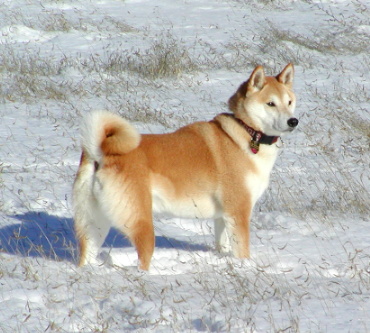
Meanwhile, I was with my girlfriend visiting her family in Amarillo for the holiday. I may have missed hometown history but nevertheless enjoyed a White Christmas. I think my dog Ilsa enjoyed the snow even more.
I’m now back in DFW with more normal weather and gifts aplenty. It was a good time but the reality of the cubicle looms tomorrow. Okay, now let’s see if I can get my stride back on blogging.